What is the Lower Explosive Limit (LEL) and why is it important?
The LIE , acronym for Lower Explosive Limit , is an essential value for safety in environments where gas leaks . Knowing this limit allows you to prevent explosions , protecting people, buildings and systems. In English it is known as LEL (Lower Explosive Limit) , and represents the minimum concentration of gas in the air above which an explosion can occur in the presence of an ignition source.
What does the LEL value indicate?
The lower explosive limit indicates the minimum threshold beyond which a gas-air mixture can become explosive.
- If the gas concentration is lower than the LEL, the explosion cannot occur.
- If the concentration reaches or exceeds the LEL, in the presence of oxygen and an ignition source, the mixture may explode.
LEL and gas detectors: how do they work?
I gas detectors use a scale of 0% to 100% LEL . This means that:
- 100% LEL = critical threshold for explosion risk
- 10% LEL = early warning threshold to intervene in time
Most professional devices are calibrated to activate the alarm around 10% of the LEL , so as to guarantee sufficient notice to act safely .
Example :
If on the technical data sheet of a detector you find the indication "alarm threshold 10% LEL" , means that the alarm will be triggered when the gas concentration reaches 10% of the minimum explosive value .
What is the lower explosive limit of methane
One of the most common examples is the LEL of methane , a gas widely used in domestic and industrial settings. The lower explosive limit of methane is 4.4% by volume (v/v) . This means that a methane-air mixture can explode if the concentration of methane in the air exceeds 4.4% (to learn more about this topic, also read Fire triangle: when does combustion occur? ).
Calculation of alarm threshold at 10% LEL (methane)
- 10% of 4.4% = 0.44%
- So, in 1 cubic meter of air , that's enough 0.44% methane to activate the alarm.
This allows you to intervene well before the explosive threshold is reached , guaranteeing maximum safety.

LEL expression: %LIE or ppm
The measuring range of a gas detector can vary depending on the environment and the type of gas being monitored:
- %LIE: used for combustible gases (e.g. methane, LPG)
- ppm (parts per million): used for toxic gases (e.g. carbon monoxide)
Typical values:
| Environment | Standard measuring range | Notes |
| Civil / commercial | 50% LEL | Maximum alarm level |
| Industrial / ATEX | 100% LIE | High risk areas |
| Toxic gases (e.g. CO) | 500ppm | High sensitivity |
Protect yourself with reliable devices: Seitron detectors
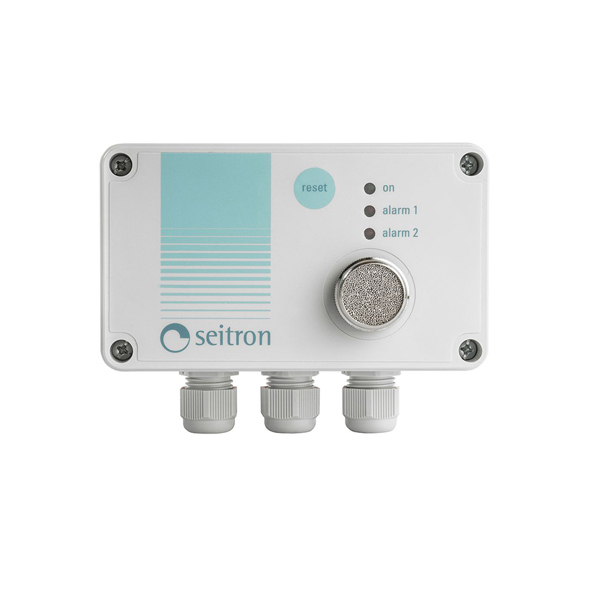
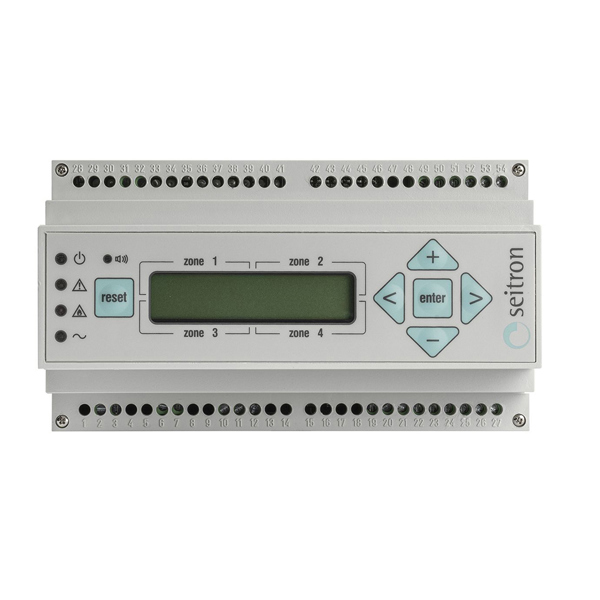
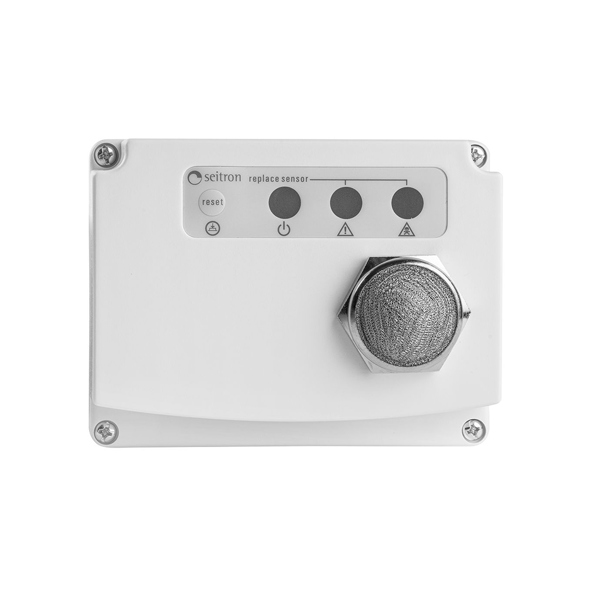
Seitron offers professional detectors capable of constantly monitoring the gas concentration, signaling in advance when dangerous thresholds are exceeded.
Why choose Seitron detectors:
- Precision in detection of combustible and toxic gases;
- Certifications compliant for civil and industrial uses;
- Also suitable for environments ATEX classified.